Recognising Christ in Everyone
Pupil Premium & Free School Meals

The Pupil Premium gives schools extra funding to raise the attainment of disadvantaged pupils from reception to year 11. It was introduced in 2011 to provide additional school funding for those children from Early Years Foundation Stage to Year 11 classed as having deprived backgrounds, and also those who had been looked after by a local authority for more than six months. The Service Premium was also introduced for children whose parent(s) are, or have since 2011, served in the armed forces.
Broadly, pupil premium funding is spent in three ways at St Francis. Significant funding is allocated to direct academic support to ensure all pupils in receipt of pupil premium funding have the necessary support to reach at least national standards of attainment in the core areas of reading, writing and mathematics by the time they leave the school. Further pupil premium funds are used to ensure pupils are able to play a full part in the life of the school, removing any differences in opportunity that might occur as a result of financial constraints. Pupil premium funds are also directed to other, less-tangible forms of support to ensure some of our more vulnerable pupils are able to access the curriculum effectively.
Pupil Premium Strategy
Apply for FREE SCHOOL MEALS (even if your child is in Reception, Year 1 or Year 2),
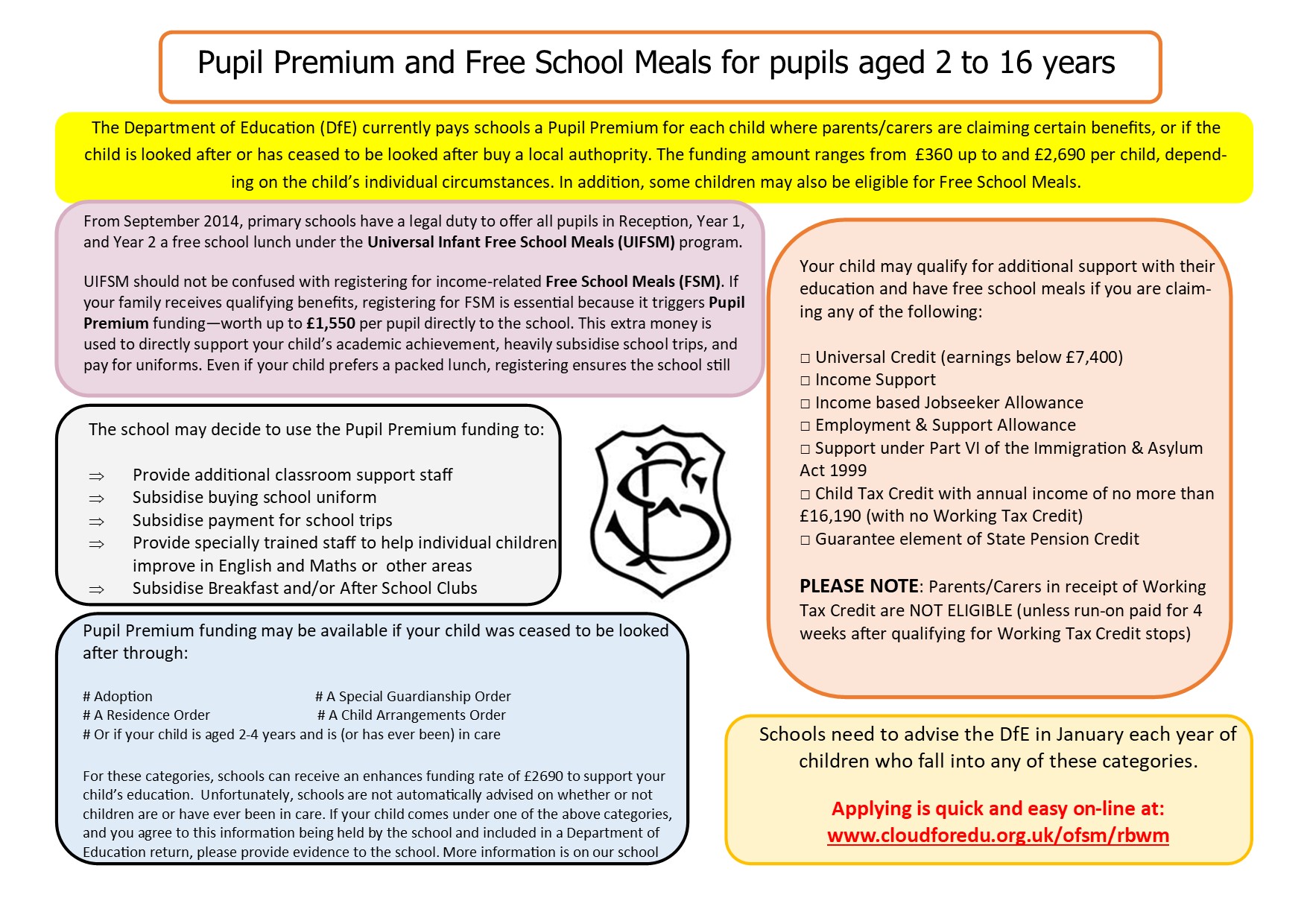
The Pupil Premium gives schools extra funding to raise the attainment of disadvantaged pupils from reception to year 11. It provides additional school funding for children classed as coming from lower-income backgrounds, and also those who have been looked after by a local authority. The Service Premium is also available for children whose parents serve, or have served in the last six years, in the armed forces. [1]
Broadly, pupil premium funding is spent in three ways at St Francis:
- Direct Academic Support: Significant funding is allocated to ensure all pupils in receipt of Pupil Premium reach at least national standards of attainment in the core areas of reading, writing, and mathematics.
- Enrichment and Opportunity: Funds ensure pupils are able to play a full part in the life of the school, removing financial barriers to trips, clubs, and activities.
- Vulnerable Pupil Support: Targeted resources are directed to less-tangible, pastoral forms of support to ensure vulnerable pupils can access the curriculum effectively.
Apply for FREE SCHOOL MEALS (even if your child is in Reception, Year 1 or Year 2)
It is quick and easy using the online form at: https://www.cloudforedu.org.uk/ofsm/rbwm/
State primary schools have a legal duty to offer all pupils in reception, year 1, and year 2 a free school meal called a Universal Infant Free School Meal (UIFSM). However, UIFSM should not be confused with registering your child for benefits-related Free School Meals (FSM).
Registering under the benefits criteria is essential because it attracts Targeted Pupil Premium funding of £1,550 per registered primary pupil directly to the school to support your child’s education.
Do you qualify?
You can register your child for Free School Meals if you receive any of the following:
- Universal Credit (All Universal Credit households now qualify for free meals. However, your net household earnings must be £7,400 or less a year to trigger the extra £1,550 Pupil Premium funding for the school).
- Income Support
- Income-based Jobseeker’s Allowance
- Income-related Employment and Support Allowance
- Support under Part VI of the Immigration and Asylum Act 1999
- The guaranteed element of Pension Credit
- Child Tax Credit (provided you’re not also entitled to Working Tax Credit and have an annual gross income of no more than £16,190).
- Working Tax Credit run-on (paid for 4 weeks after you stop qualifying for Working Tax Credit).
How does it work?
- Quick and Easy Check: Registering takes just a few moments online via the RBWM Application Link.
- Save Money: If your child takes the free school meal, it saves your household roughly £500 a year while securing critical funding for school resources.
- Keep Your Routine: If you prefer your child to bring a packed lunch, you should still register. As long as you are registered under the targeted criteria, the school still receives the £1,550 extra funding to help your child in class.
- 100% Confidential: Registration is entirely confidential. Other children will not know who is registered, and it has no impact on any other welfare benefits you claim. Eligibility is reviewed via annual rechecks to ensure your details remain up to date.